Citations 101: The Hows, Whats, and Whys of Citations
What a citation actually does, why academic writing requires one, and what the Citation Project's research found about how students really read and cite sources.
A citation is a small piece of infrastructure: a name, a date, ideally a page number, tucked at the end of a sentence and pointing at exactly where a claim came from. Citations are used to share the source you used with your readers, so that your readers know what kind of a source you used, how you came up with a conclusion, if any of your arguments are based on an assumption made by the source, whether the source is credible or not, etc…
Think About It
Quick one before we start: think of the last claim you accepted from someone you’d call an expert. Could you actually walk someone else through the evidence behind it, or were you mostly running on their title?
What a citation is actually doing there
A citation bundles three things into one small tag: who said it, when, and where a reader can go verify it. Pull any one of those out and the whole mechanism stalls. A claim with no name attached is folklore. A claim with a name but no way to check it is a rumor wearing a better outfit.
Writing, especially the academic kind, runs on an honor system with an audit trail bolted onto it. Making a claim is allowed. Showing where it came from is required, so whoever reads it next can go check the work instead of just taking your word for it.
Why academic writing insists on this
Say a claim shows up with nothing attached to it. Maybe it’s accurate. Maybe the person saying it has genuinely thought about this for years. Neither of those tells you how they arrived there. Was it a survey of ten thousand people, or a strong hunch after one long conversation with a friend? A controlled study, or a scroll through search results that happened to agree with them already? Without a citation, that whole process, the methodology, stays behind a door nobody can open.
Peer-reviewed academic writing operates on the opposite premise: everything ought to be checkable, in principle, by a stranger who wasn’t anywhere near the original research. Methods sections exist so someone else can retrace exactly how a result got produced, sample size and all. Citations are the connective tissue running through that system, linking a claim to the precise study, page, or dataset supposed to support it.
Sometimes that transparency doesn’t survive a closer look. The method described doesn’t line up with the conclusion drawn. A source turns out to be missing, or thinner than the sentence built on top of it. Raising that is a legitimate move that deserves a real answer. The moment a claim can’t be traced back to something checkable, the writing around it gets shaky, whatever letters happen to follow the author’s name.
Which points at the actual trade happening here: trust gets extended to a claim on the strength of the evidence sitting under it. Expertise plays a role, sure, but the evidence is what does the real convincing. A citation is what lets a reader with zero reason to take your word for anything go verify it themselves and land on trust honestly, rather than borrowing it from a title.
Quick check
A post claims 'gaming improves reaction time by 30%,' written by someone with a PhD, with no source attached. What's the most useful response?
Pro Tip
The two-second version of checking a claim: is there a name attached, and does it lead somewhere you could actually go visit? If either piece is missing, treat the number as decoration until proven otherwise.
A research team that studied this exact problem
A group of researchers got curious about a specific question: when college students cite a source, are they reading it closely, or grabbing a sentence and moving on? Their answer became the Citation Project, a multi-year research effort spanning sixteen US colleges and universities, collecting real student papers alongside the sources those papers actually cited (The Citation Project). Rather than draw conclusions from one classroom or one professor’s gut feeling, the team built the Citation Project Source-Based Writing Corpus, a dataset large enough to say something reliable about the country rather than a single course (Jamieson, 2017).
The numbers that came out weren’t flattering. Roughly 70% of student citations pulled from just the first or second page of a source, and 94% engaged with only a sentence or two of it before moving on to the next citation (The Citation Project). That’s the reading equivalent of judging a whole book by its introduction and one paragraph from chapter one, then citing it as though every page had been turned.
More than half the papers researchers studied showed patchwriting somewhere in them (The Citation Project). Patchwriting keeps a source’s original sentence structure and logic mostly intact while swapping in a handful of synonyms, producing something that reads like a paraphrase from a distance and a light word-swap up close.
Think About It
Test this on yourself, honestly: pick something you’re confident is true. Could you trace it back to an actual source right now, or would you be citing vibes?
Quick check
A student takes a source sentence, swaps three words for synonyms, keeps the same sentence order, and calls it a paraphrase. What's actually happening?
Two citations, taken apart
Every citation so far in this post has stayed folded politely into a sentence. Pull one out flat and it’s a fairly rigid little structure, worth taking apart once, along with a trickier relative: a citation reporting on another citation.
Here’s a real one, formatted the way a reference list would print it:
Serviss, T. (2017). The rise of RAD research methods for writing studies: Transcontextual ways forward. In T. Serviss & S. Jamieson (Eds.), Points of Departure: Rethinking Student Source Use and Writing Studies Research Methods (pp. 3–22). Utah State University Press. https://doi.org/10.7330/9781607326250.c00bThe claim it backs up: writing research needs to run on RAD principles, replicable, aggregable, and data-driven, rather than settle for conclusions built from a single classroom or one researcher’s instinct.
Taken apart, piece by piece:
Serviss, T.→ the author element, one named person rather than an organization standing in.(2017)→ the date element, an actual publication year sitting right where a reader expects to find it.The rise of RAD research methods...→ the title element, naming this specific chapter, distinct from the larger book it lives inside.In T. Serviss & S. Jamieson (Eds.), Points of Departure...→ the container element, crediting the edited collection and its editors separately from the chapter’s own author, even in the odd case where they’re partly the same person.(pp. 3–22)→ the locator, pinpointing exactly where inside that larger book this chapter sits.Utah State University Press→ the publisher element.https://doi.org/10.7330/9781607326250.c00b→ a DOI, a permanent link built specifically not to rot the way an ordinary URL eventually might.
Now the harder version: a citation of a citation, for when the source you’re reading is itself reporting somebody else’s earlier finding.
The Citation Project’s very first study, a pilot the researchers themselves called “Writing from Sentences,” found enough of a pattern in one small dataset to justify testing it on a much larger scale. That pilot isn’t read directly here. It’s read through Sandra Jamieson’s 2017 chapter tracing the project’s history, which is where this post actually encountered it. Written out, only the source actually read gets a full entry:
Howard, Serviss, & Rodrigue (2010), as cited in Jamieson (2017), “The Evolution of the Citation Project,” pp. 33–61. https://doi.org/10.7330/9781607326250.c001Taken apart, piece by piece:
Howard, Serviss, & Rodrigue (2010)→ the original researchers and the year of the finding actually being reported, named even though their original publication was never opened directly for this post.as cited in→ the flag doing the real work here, marking this as a secondhand report of someone else’s data rather than a firsthand reading of it.Jamieson (2017), pp. 33–61→ the author, year, and page range of the source that was actually read, and the only one that belongs in a full reference list, since a secondary citation vouches for the source that passed the finding along, not the one it originally came from.
That “as cited in” is an honest admission: whoever’s writing this only has secondhand knowledge of Howard, Serviss, and Rodrigue’s actual data, filtered through how Jamieson chose to summarize it years later. It’s still a citation. It’s just one wearing its own limits on the outside, which is the exact kind of transparency the rest of this post keeps arguing for.
The order this is supposed to happen in
The shallow-reading numbers above line up with a specific habit: writing the argument first, then circling back afterward to sprinkle citations on top so the paper looks properly sourced. Run the order that way and you get exactly what the Citation Project’s data captured — a citation to a source’s opening page because that’s as far as anyone actually got, one borrowed sentence standing in for real engagement with a whole argument, a paraphrase close enough to the original to register as patchwriting rather than synthesis.
The sturdier order runs the other way. Read a source closely enough to follow its actual logic, sit with it, let it complicate something you already believed, and only then start building your own argument out of that synthesis, with citations marking exactly where each piece of your thinking came from. A citation ends up documenting real work already done, sitting exactly where that work happened.
Myth Busters
Myth: citations get bolted onto an essay near the end, once the argument is already decided, mostly to prove that research happened. Fact: citations work as a paper trail for thinking that already occurred through close reading, showing up throughout an argument that the sources helped shape from the start.
So what do you actually do with this
Next time a source lands in front of you, try reading past the first page before typing a single citation. Sit with the argument long enough to genuinely agree with part of it, push back on another part, or notice where it’s thinner than it first looked. Then write your own sentence, in your own structure, and point back at precisely where the idea came from. That’s the actual job of a citation: proof of real contact with a source, sitting exactly where the thinking happened.
Curious how to tell a source that’s genuinely credible from one that just performs credibility well? That’s credibility, validity, and reliability. Or for the deeper case on why trust should trace back to evidence instead of a title, that’s cognitive bias 101.
Frequently asked questions
What is a citation in academic writing?
A citation is a pointer built from a few pieces of information — who made a claim, when, and where a reader can go check it — attached to the exact spot in a text where that claim shows up. It lets an idea be traced back to where it came from instead of being taken on faith.
Why do academic papers require citations?
Academic writing runs on the premise that a claim should be checkable by someone who wasn't in the room when it was made. A citation links a claim to the specific study, dataset, or argument behind it, so a reader can inspect the methodology directly rather than relying on the writer's word alone.
What did the Citation Project find about how students use sources?
Studying student papers collected from sixteen US colleges, Citation Project researchers found that roughly 70% of citations pulled from just the first or second page of a source, 94% engaged with only a sentence or two of it, and more than half the papers showed patchwriting somewhere in them.
What is patchwriting?
Patchwriting is what happens when a writer keeps a source's original sentence structure and logic largely intact while swapping in a handful of synonyms. It sits between quoting and genuine paraphrase, without the actual digesting a paraphrase is supposed to involve.
Ready to think like this on purpose?
Alekhni's programs and writing tools are built to turn this kind of thinking into a habit.
Keep reading
 AI in education
 Teachers vs. AI: Welcome to the Classroom Detective Era
Do AI detectors actually work? Read research on false positives, what the IB's AI policy says, and why punishing AI use may not be the best solution.
Read more → Critical Thinking
 Cognitive Bias 101: Your Brain Is Kind of Lying to You
Cognitive bias examples students recognize: confirmation bias, hindsight bias, black-and-white thinking, and authority bias, explained with real research.
Read more →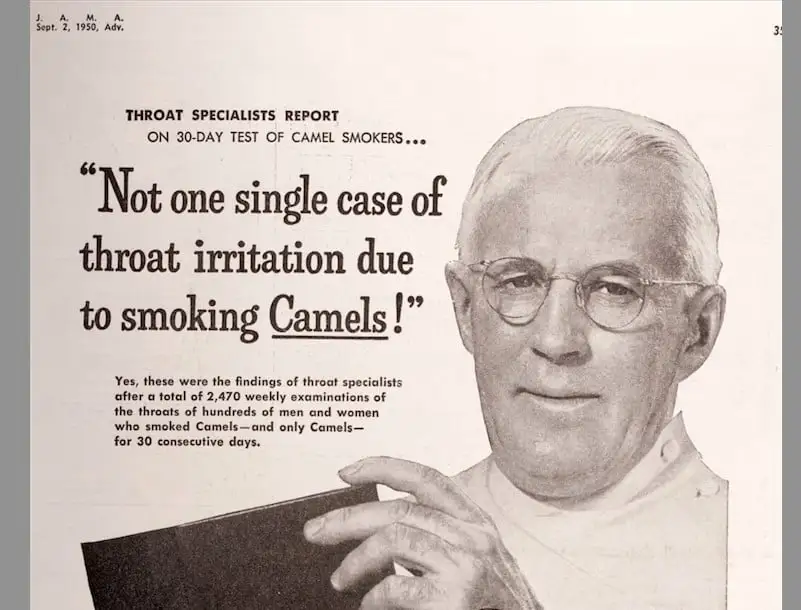 Case Study
 Case Study: How Bad Logic and Fake Credibility Kept a Nation Smoking for Decades
A logical fallacies case study: anecdotal evidence, appeal to authority, and conflict of interest kept America smoking 14 years after the science was clear.
Read more →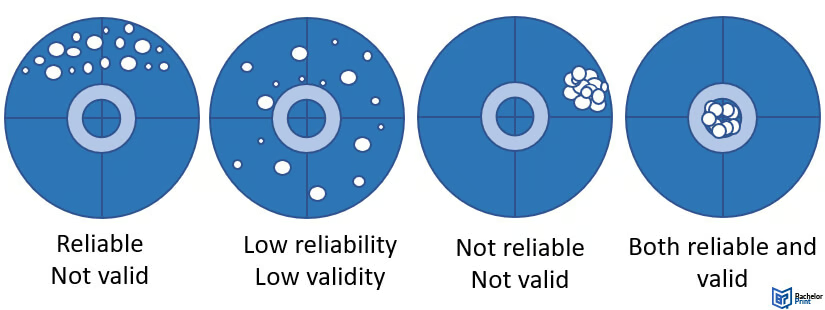 Critical Thinking
 Wait, Can I Actually Trust This? (A Guide for People Who Doomscroll)
The difference between reliability, validity, and credibility, explained in plain English, with real examples and research on how to evaluate any source.
Read more →