Wait, Can I Actually Trust This? (A Guide for People Who Doomscroll)
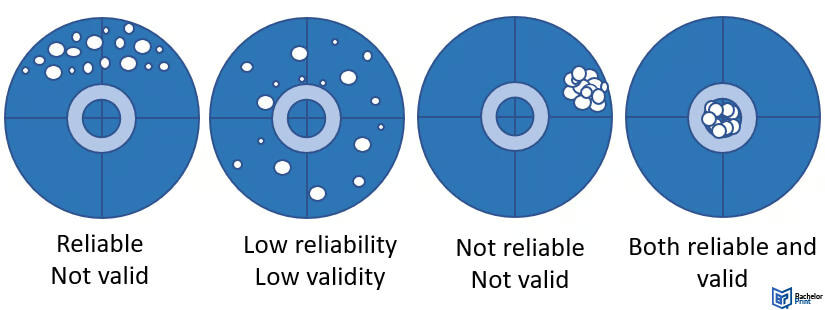
The difference between reliability, validity, and credibility, explained in plain English, with real examples and research on how to evaluate any source.
Okay so picture this. You’re scrolling, half paying attention, and someone posts “studying with music makes you smarter, it’s SCIENCE” with a screenshot of something that looks vaguely official. And some part of your brain goes… does it though? Not disagreement, just a tiny alarm going off. A little internal “hm.”
That “hm” is the whole point of this post. You already have it. Most people do. You just haven’t been given the words for what it’s checking.
Think About It
Real talk before we start: has this ever happened to you, someone says something confidently, and you believe them for like a solid five minutes, and then later you’re like “wait, why did I believe that?” What made it feel true in the moment? Hold onto that thought.
Let’s run that music claim through the wringer, because it’s a perfect little case study and nobody involved smokes anything.
First question your brain should ask: who’s talking?
Say the music claim comes from your friend, who read it in a group chat, which got it from an account that posts “facts,” which credits a “study.” Follow that chain far enough and it basically evaporates. Nobody in it researches anything for a living. It’s just vibes, forwarded.
Now imagine instead it comes from a sleep and learning researcher at a university, explaining their own published work. Same sentence, wildly different weight. Weighing credentials like that isn’t snobbery. It’s a useful shortcut: does this person know this stuff, and do they have anything to gain by you believing them?
That second half matters more than people give it credit for. If the “study” showing music helps you focus was paid for by a headphone company, you don’t have to assume they lied: you just have to notice they had a reason to want a specific answer, and read a little more carefully because of it. A source can be nice and still be interested. Both things can be true.
Think About It
Think of a source you trust automatically (a teacher, a specific creator, a family member giving advice). What is it about them, specifically, that earned that? Would you be able to explain it to someone else, or does it just feel obvious?
Second question: did they check the thing they’re claiming?
Here’s where it gets sneaky, because this is the part that even honest, well-meaning people mess up constantly.
Say researchers really do run a study on music and studying. They play music, then ask students afterward, “did that feel helpful?” Everyone says yes, it felt great, very chill. Headline gets written: “Music Helps You Study, Confirmed.”
Except… they measured how it felt, not how much you learned. Those are not the same thing. Feeling relaxed and retaining information are cousins, not twins. A study that wants to prove “music helps you learn” needs to test learning: quiz scores, recall, something measurable, not vibes after the fact. If it tests the wrong thing, it doesn’t matter how careful or honest everyone was. It’s still answering a different question than the one in the headline.
This mismatch happens constantly and it’s rarely on purpose. A school wants to know “did students learn from this assembly,” so they ask “did you enjoy the assembly.” Enjoyment and learning are not interchangeable: plenty of things are enjoyable and teach you nothing, and plenty of things are boring and extremely educational (looking at you, some textbooks). Measuring the wrong thing, confidently, is one of the most common ways a completely honest, completely accurate result still ends up misleading.
The construct validity idea traces back to Cronbach & Meehl, 1955, and the reliability-vs-validity framework used throughout this post follows the classic breakdown in Trochim’s Research Methods Knowledge Base.
Quick check
A gaming app wants to know if its new update makes players 'happier.' So it measures how many hours people spend playing per day, and hours go up after the update. Fair conclusion?
Third question: would this still be true tomorrow?
Let’s say the music study did measure the right thing: real quiz scores, not vibes. Great. One more question: did they run it once, on twelve of their friends, on a random Tuesday? Or did other researchers, in other places, with other students, try it and land in the same neighborhood?
One result is a data point. It’s not nothing, but a single run can go sideways for a hundred boring reasons that have nothing to do with music: everyone was tired that day, the quiz was easy, half the group already knew the material. Genuine confidence shows up when the result keeps happening, on repeat, with people who have zero connection to the original researchers and zero reason to fudge it in the same direction. This isn’t hypothetical: when a large team of researchers tried to independently re-run 100 published psychology studies, only about 36% produced a statistically significant result the second time, even using the original materials (Open Science Collaboration, 2015).
This is also, weirdly, where your gut already has good instincts. You probably already trust “three different friends independently told me this restaurant is good” more than “one guy said so once.” That’s the same muscle. You already have it.
Think About It
Have you ever tried a “life hack” from a video — a study trick, a food thing, whatever — and it just didn’t work for you the way it worked in the video? What do you think was going on there?
A slightly unhinged but genuinely useful mental picture
Imagine a bathroom scale that’s broken in a very specific way: it adds exactly ten pounds to every single reading, for everyone, every time, forever. Step on it a hundred times and it’s ten pounds off, a hundred times in a row.
That scale is, in a weird sense, extremely trustworthy: it’s shockingly consistent. And it is also completely wrong, every single time. Consistency and correctness are just not the same property, and a broken tool can absolutely nail one while failing the other.
Quick check
That ten-pounds-heavy scale, from every angle: which combination actually describes it?
Myth Busters
Myth: if a claim keeps getting repeated and confirmed, it must be true. Fact: repetition proves it’s consistent, not correct: a flawed method can produce the same flawed answer forever, loyally, like the world’s most stubborn broken scale.
So what do you do with all this
Next time something crosses your feed sounding extremely certain of itself, you don’t need a whiteboard and a research degree. Just ask, in whatever order feels natural: who’s telling me this, and do they have a reason to want me to believe it? Did they check the thing they’re claiming, or something that just looks similar? And has this held up more than once, for more than one person, or am I looking at a sample size of “some guy”?
You already ask versions of these questions constantly: about restaurants, about relationship advice, about whether that “everyone’s doing it” thing your friend swears by actually holds up. Turns out that instinct has a name. Three names, technically. Now you’re just doing it on purpose.
Want to see what happens when literally nobody asks these questions, for fourteen years straight, on a national scale? That’s the cigarette case study. Or if you’re more curious about why bad arguments feel so convincing in the first place, that’s cognitive bias 101.
Frequently asked questions
What's the difference between reliability and validity?
Reliability is about consistency: does a method give you the same result every time you use it? Validity is about accuracy: does it measure the thing it claims to measure? A method can be reliable without being valid, like a scale that's always off by ten pounds: perfectly consistent, consistently wrong.
Can something be reliable but not valid?
Yes, and it's a common trap. A broken bathroom scale that adds ten pounds every single time is extremely reliable (same error, every time) and completely invalid (never gives you the real number). Consistency doesn't guarantee correctness.
How do you know if a source is credible?
Ask who's telling you this and whether they have a reason to want you to believe it, whether they tested the specific claim they're making (not something that just looks similar), and whether the result holds up when other, unrelated people try to replicate it.
What is construct validity?
Whether a measurement captures the concept you meant to study, rather than something else that just happens to correlate with it. First formally defined by psychologists Cronbach and Meehl in 1955, and still the standard term for a measurement mismatch.
Ready to think like this on purpose?
Alekhni's programs and writing tools are built to turn this kind of thinking into a habit.
Keep reading
 AI in education
 Teachers vs. AI: Welcome to the Classroom Detective Era
Do AI detectors actually work? Read research on false positives, what the IB's AI policy says, and why punishing AI use may not be the best solution.
Read more →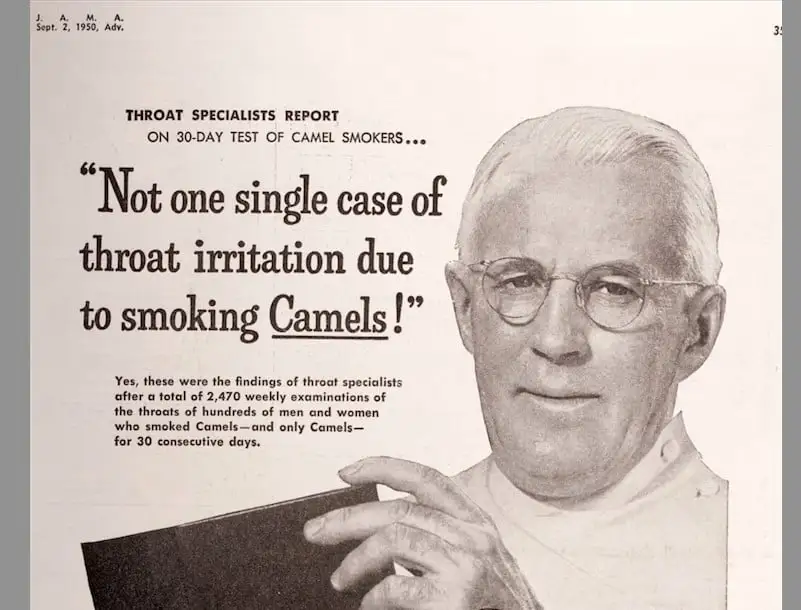 Case Study
 Case Study: How Bad Logic and Fake Credibility Kept a Nation Smoking for Decades
A logical fallacies case study: anecdotal evidence, appeal to authority, and conflict of interest kept America smoking 14 years after the science was clear.
Read more → Research Skills
 Citations 101: The Hows, Whats, and Whys of Citations
What a citation actually does, why academic writing requires one, and what the Citation Project's research found about how students really read and cite sources.
Read more → Critical Thinking
 Cognitive Bias 101: Your Brain Is Kind of Lying to You
Cognitive bias examples students recognize: confirmation bias, hindsight bias, black-and-white thinking, and authority bias, explained with real research.
Read more →